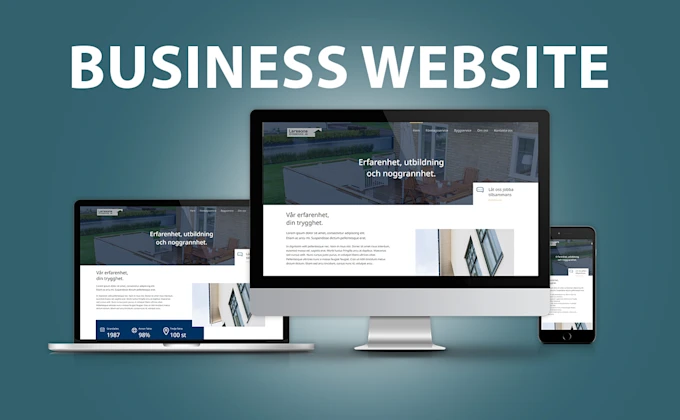
How to Design a Professional Business Website
Learn how to design a professional business website that builds trust and boosts sales. Our guide covers layouts, SEO, and professional WordPress design tips.

In today’s competitive digital landscape, your business website isn't just an online brochure; it's your most powerful sales tool and often the first impression potential customers have. A professionally designed website acts as a lead-generation engine, anchors your brand's credibility, and provides a portal for client engagement. If your current website feels dated or fails to convert visitors, you’re likely losing revenue. Investing in a high-quality online presence is critical for sustainable business growth.
Define Your Core Objectives and Target Audience
Before any design or development, deeply understand your website's purpose. What problem will your digital presence solve? Are you aiming for e-commerce sales (WooCommerce, Shopify), lead capture, or showcasing your portfolio and expertise? Each objective requires a distinct approach to design, functionality, and content.
Equally critical is a clear understanding of your target audience. Who are you trying to reach?
- Identify Pain Points: What specific challenges, questions, or needs does your ideal visitor have that your business can address? (e.g., a law firm's audience seeks trust, a bakery's customers crave visual inspiration).
- Develop User Personas: Go beyond demographics. Create detailed profiles of your ideal customers, including their online behavior, motivations, and tech proficiency. This informs your website's tone and navigation.
- Define Clear Calls to Action (CTAs): What single, most important action do you want users to take on each page? Examples: "Get a Free Quote," "Shop Now," "Download Our eBook," or "Book a Consultation."
Choose the Right Platform and Hosting for Scalability
Your website's underlying technology determines its flexibility, performance, and scalability. For most small to medium-sized businesses, WordPress remains the industry standard, offering ownership, an expansive plugin ecosystem, and customization. For online retail, Shopify provides a robust, all-in-one e-commerce solution known for ease of use. WooCommerce seamlessly integrates with WordPress for powerful e-commerce capabilities.
Beyond the platform, reliable web hosting is non-negotiable. Subpar hosting leads to slow loading speeds, frustrating users and negatively impacting search engine rankings. Ensure your chosen host provides:
- SSL Certificates (HTTPS): Essential for security, SEO, and trust.
- Regular Backups: Protects your site data.
- High Uptime Guarantees: Ensures your site is almost always available.
- Scalability Options: Handles increased traffic as your business grows. Avoid free hosting, which often comes with limitations, intrusive ads, and poor performance.
Focus on Intuitive UI/UX Design and Mobile-First Principles
User Interface (UI) and User Experience (UX) are paramount. Your design should be clean, aesthetically pleasing, intuitive, and optimized for all devices.
- The 5-Second Rule: A visitor should grasp who you are, what you offer, and its benefits within five seconds of landing on your homepage. Clarity always trumps cleverness.
- Strategic Whitespace: Use empty space to guide the user's eye, reduce cognitive load, and highlight key content, preventing clutter.
- Consistent Brand Identity: Maintain a cohesive visual identity across your site: consistent color palette (2-3 primary colors), professional typography (2-3 complementary fonts), and a consistent tone of voice.
- Mobile-First Approach: With over 60% of global web traffic from mobile devices, designing for smartphones first is crucial. Your website must be "responsive" (adapting to different screen sizes) and offer a seamless experience on smaller screens, affecting navigation, image optimization, and button sizing.
Elevate Credibility with Social Proof and Security Measures
Professionalism is linked to trust. An unreliable, unsecure, or information-lacking website will lose visitors. Actively building and showcasing trust is critical for conversions.
- Prominent Testimonials and Reviews: Feature authentic feedback from satisfied clients. Video testimonials or case studies are compelling. Place them strategically on your homepage, service pages, and a dedicated section.
- Client Logos and Partnerships: Display logos of reputable brands you've worked with. "Social proof by association" boosts your standing.
- Clear Contact Information: Make it easy for potential customers to reach you. Include a professional email, phone number, and physical address (if applicable) in your footer and on a dedicated contact page. Consider live chat.
- Transparent Legal Pages: Essential for trust and compliance. Ensure accessible Privacy Policy, Terms of Service, and Disclaimer pages, especially for GDPR and CCPA.
- Security Badges: Displaying trust badges from security providers (e.g., SSL certificate providers) reinforces your site's security.
Optimize for Search Engines (SEO) from the Ground Up
A stunning website is useless if it can't be found. SEO should be an integral part of your website's design and content strategy from day one.
- Strategic Keyword Integration: Research keywords your audience uses. Naturally weave them into page titles, meta descriptions, headings (H1, H2, H3), and body copy, especially in the first paragraph of each section.
- Image Optimization with Alt Text: Use descriptive alt text for every image on your site for SEO and accessibility. Example: "Red vintage coffee grinder on wooden counter" instead of "IMG_001.jpg".
- Site Speed is Paramount: Google prioritizes fast-loading websites. Optimize images (compress without quality loss), leverage browser caching, minimize code, and choose fast hosting. Aim for load times under 2-3 seconds.
- Robust Internal Linking Structure: Link to relevant service pages, blog posts, or product categories. This keeps users engaged, distributes "link equity," and helps search engines understand your site's structure.
- Schema Markup Implementation: Use structured data (schema markup) to provide search engines with more context, leading to rich snippets in search results (e.g., star ratings, business hours).
Conclusion
Designing a professional business website is a strategic investment. By defining objectives and audience, selecting the right technology, prioritizing intuitive UI/UX and mobile-first design, bolstering trust with social proof, and integrating robust SEO, you build a powerful digital asset. Your website is a living tool requiring ongoing maintenance, content updates, and adaptation as your business evolves and digital trends shift. Treat it as your most valuable employee to always on, always working, and representing your brand with excellence.
Need help? If you want a high-converting, professional website that not only looks stunning but also drives real business results, Deloar is here to help. Whether you need a custom WordPress site, a high-performance Shopify store, a feature-rich WooCommerce shop, or a stunning landing page built with Elementor, you can hire Deloar on Fiverr. I’ll bring your vision to life with expert precision, top-tier design, and premium support, ensuring your online presence truly stands out.
Reactions
Be the first to react.
Discussion
Comments(0)
Loading comments…
About the author
Deloar , Premium WordPress & Shopify Developer
Fiverr Level 2 freelancer building modern, conversion-focused websites for founders and brands worldwide.