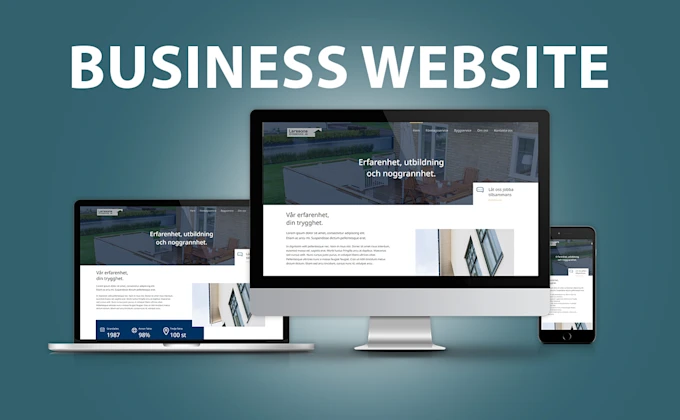
Why Every Business Needs a Website
Discover why a professional website is the ultimate growth tool for your business. Learn how to build credibility, reach more customers, and boost conversions.

In today’s hyper-connected world, the question is no longer whether your business should be online, but how quickly you can establish a professional presence. Consumers treat Google as their primary consultant, and social media as their digital mall. If your business isn't there to greet them, you are effectively giving your competitors a free pass to win over your target audience.
A website is more than just a digital brochure; it is your 24/7 salesperson, your most reliable customer service representative, and the foundation of your brand's digital identity.
Establishing Instant Credibility and Trust
First impressions are everything. When a potential customer hears about your business, the first thing they do is search for your name online. If they find a polished, functional website, it signals that you are a legitimate professional. Conversely, if you have no website or a poorly designed one, it raises red flags about your reliability.
- Professionalism: A branded domain (like yourbusiness.com) looks far more professional than a social media page alone.
- Social Proof: Your website is the perfect place to host testimonials, case studies, and reviews that build buyer confidence.
- Brand Control: Unlike social media platforms where you are limited by their layout and algorithms, on your website, you control the narrative, the colors, and the user experience.
24/7 Accessibility and Global Reach
Unlike a physical storefront that closes its doors at 5:00 PM, a website never sleeps. This allows customers to find your information, browse your services, or make purchases at 2:00 AM on a Sunday.
By moving online, you effectively remove geographical barriers. A local boutique in a small town can sell products to customers three states away through a WooCommerce or Shopify integration. Even for service-based businesses, a website allows you to capture leads through contact forms while you sleep, ensuring you never miss a potential opportunity.
Leveraging Data and Customer Insights
A website provides a level of data that traditional marketing simply cannot match. By using tools like Google Analytics, you can see exactly how people are finding you and what they are interested in.
Key metrics you can track include:
- Referral Sources: Are people finding you through Google, Instagram, or direct links?
- User Behavior: Which pages do they stay on the longest? Where do they drop off?
- Demographics: Where is your audience located, and what devices are they using?
This data allows you to make informed decisions about your marketing budget, focusing on the channels and products that actually drive revenue.
Cost-Effective Marketing and High ROI
Many small business owners shy away from websites due to the perceived cost. However, when compared to the ongoing costs of print ads, physical mailers, or high-rent storefronts, a website is one of the most cost-effective investments you can make.
With a WordPress site, for example, the initial setup cost provides you with a permanent digital asset. SEO (Search Engine Optimization) allows you to rank for specific keywords, bringing in organic traffic without the recurring cost of pay-per-click advertising. Over time, the Return on Investment (ROI) of a well-optimized website far outpaces almost any other marketing strategy.
Seamless E-commerce and Booking Integration
Modern web technology has made it easier than ever to automate your business processes.
- Direct Sales: With Shopify or WooCommerce, you can manage inventory, process payments, and calculate shipping automatically.
- Appointment Setting: Service providers like consultants, salons, or contractors can integrate booking calendars (like Calendly) to let clients schedule appointments directly, reducing administrative back-and-forth.
- Customer Support: Integrated FAQs and chatbots can answer common questions instantly, freeing up your time for more complex tasks.
Practical Tips for Getting Started
Building a website might feel overwhelming, but following these steps will set you on the right path:
- Define Your Goal: Is your site for lead generation, direct sales, or purely informational?
- Choose the Right Platform: Use WordPress for flexibility, Shopify for heavy e-commerce, or Elementor for high-end visual design.
- Prioritize Mobile-First Design: More than half of web traffic comes from mobile devices; ensure your site looks great on phones.
- Focus on Speed: A slow site frustrates users and hurts your Google ranking.
- SEO from Day One: Use clear headings, meta descriptions, and keyword-rich content to help Google find you.
Conclusion
A website is the engine of modern business growth. It builds trust, expands your reach, and provides invaluable data that helps you scale. In a competitive market, staying offline is no longer an option—it is a risk. By investing in a professional digital presence today, you are securing the future of your brand for years to come.
Need help? If you are ready to take your business to the next level with a stunning WordPress site, a high-converting Shopify store, or a custom WooCommerce experience, Deloar is here to help. From Elementor designs to technical SEO setups, you can hire Deloar on Fiverr to build a website that delivers real results.
Reactions
Be the first to react.
Discussion
Comments(0)
Loading comments…
About the author
Deloar , Premium WordPress & Shopify Developer
Fiverr Level 2 freelancer building modern, conversion-focused websites for founders and brands worldwide.